

Music is often perceived through sound. However, artists like Savvy Turtle show it’s a multi-sensory experience. His musical journey is truly remarkable. It began after a profound life change: he became deaf while serving in the U.S. Army in Iraq. This challenge became a catalyst. It led him to a unique approach to music. He relies on the intricate language of vibration. This reveals a deep connection between math and musical frequencies. His story is a powerful testament to resilience. It highlights how the human spirit can adapt. People can find new ways to connect with art and expression.
The Foundation of Sound: Vibration and Frequency
Sound, at its core, is vibration. Vibrations travel through a medium. Their speed determines the sound’s frequency. This understanding is significant for Savvy Turtle. He doesn’t rely on hearing to create music. Instead, he feels these vibrations.
- Vibrations as the Source: When a musical instrument is played, it produces vibrations that can be felt, even if they aren’t heard in the traditional sense. The faster the vibration, the higher the frequency, and the higher the perceived pitch, as iDrumTune explains.
- Math’s Musical Harmony: The connection between music and math dates back to ancient times, with mathematicians and musicians recognizing the mathematical patterns within musical intervals and scales. For instance, an octave, a fundamental interval in music, corresponds to a doubling of frequency, a simple and elegant mathematical ratio. As iDrumTune explains, understanding these frequency ratios is essential for appreciating the mathematical structure underlying musical harmony.
- Fourier Analysis: Deconstructing Sound: In modern music, the mathematical technique of Fourier analysis allows the breakdown of complex sounds, like a chord played on a guitar, into their individual component frequencies. This decomposition reveals the fundamental frequency (the base note) and a series of harmonic frequencies (overtones) that contribute to the unique timbre or quality of the sound. This understanding is crucial for both analyzing and creating music, particularly in sound design and electronic music production.
“If you love math then you can learn how to play music.” – Savvy Turtle
Savvy Turtle’s Vibrotactile Symphony:
Savvy Turtle’s ability to experience music shifted after his military service. He became deaf while serving in the U.S. Army in Iraq. This change, while challenging, became a catalyst. It led him to develop a unique approach to music. He relies on the intricate language of vibration. This reveals a deep connection between math and musical frequencies.
- Feeling the Rhythm: He has described how he perceives the patterns and pulses of the music through vibration, allowing him to internalize the beat and tempo with precision.
- Decoding Frequencies: Through dedicated practice and a deep understanding of the mathematical principles of sound, he has trained himself to differentiate between various frequencies by the way they feel. This enables him to recognize not only notes and intervals but also to manipulate them to create harmonies and melodies.
- Adapting Through Resilience: Savvy Turtle’s ability to process music through touch demonstrates the remarkable adaptability of the human brain, which can reroute sensory processing in response to significant changes.
A Legacy of Deaf Musicians:
Savvy Turtle is part of a rich history of deaf musicians. These artists have found unique ways to connect with music. Ludwig van Beethoven is a notable example. He continued composing after losing his hearing. Beethoven reportedly felt vibrations through his piano. Another inspiring figure is Dame Evelyn Glennie. She is a profoundly deaf percussionist. Glennie uses her entire body to feel the vibrations of her instruments. Artists like these, including Savvy Turtle, prove that deafness is not a barrier to musical achievement, as AI-Media has reported.
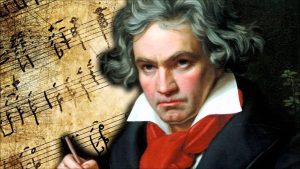

Produktion Bärbel Recktenwald England
The Impact of Military Service:
His military experience profoundly impacted his life and music. He is a wounded veteran who sustained a spinal cord injury. These experiences, coupled with his deafness, shaped his unique perspective. The challenges he faced fueled his creativity. They also built his resilience. This enables him to create music with raw honesty and emotional depth.
Technology and the Future of Inclusive Music:
Savvy Turtle’s innovative approach, along with technological advancements, is paving the way for a more inclusive future for music.
- New Sensory Experiences: Devices like haptic suits, which allow people to “feel” music through their skin, offer exciting possibilities for enhancing musical experiences for both deaf and hearing audiences.
- Expanding Musical Education: These technologies, alongside the inspiration from artists like Savvy Turtle, can make music education more accessible and engaging for those with hearing impairments.
Conclusion:
Savvy Turtle’s story is a compelling testament to the human spirit’s power. It shows the deep connection between music, vibration, and mathematics. He composes, writes, and plays music by feeling vibration frequencies. This ability is particularly significant after experiencing hearing loss during his military service. It demonstrates that music is a universal language. It can be accessed and created through various senses. By sharing his unique perspective, he inspires others. He also showcases the potential of vibrotactile composition. He is not only creating powerful and moving music. He’s inspiring others to explore the diverse ways music can be enjoyed. This transcends traditional notions of being a musician.
About Savvy Turtle:
Savvy Turtle is a creative force who defies expectations, a Deaf musician and wounded veteran with a spinal cord injury, whose life’s journey is as unique and powerful as his music. Blending various genres, he creates a sound that transcends limitations, captivating audiences with its raw honesty and emotional depth. He is a trailblazer, demonstrating that music truly is for everyone.


Savvy Turtle is truly amazing and Blessed with God given abilities to withstand the pain of war on his body to be able to build his kingdom and music as he has demonstrated his ability to make it happen through God’s grace on his life, truly inspiring.